
The outline comes first
What the component is going to be is decided before anything is cut. The stage receives a shape to follow, not a shape to invent.
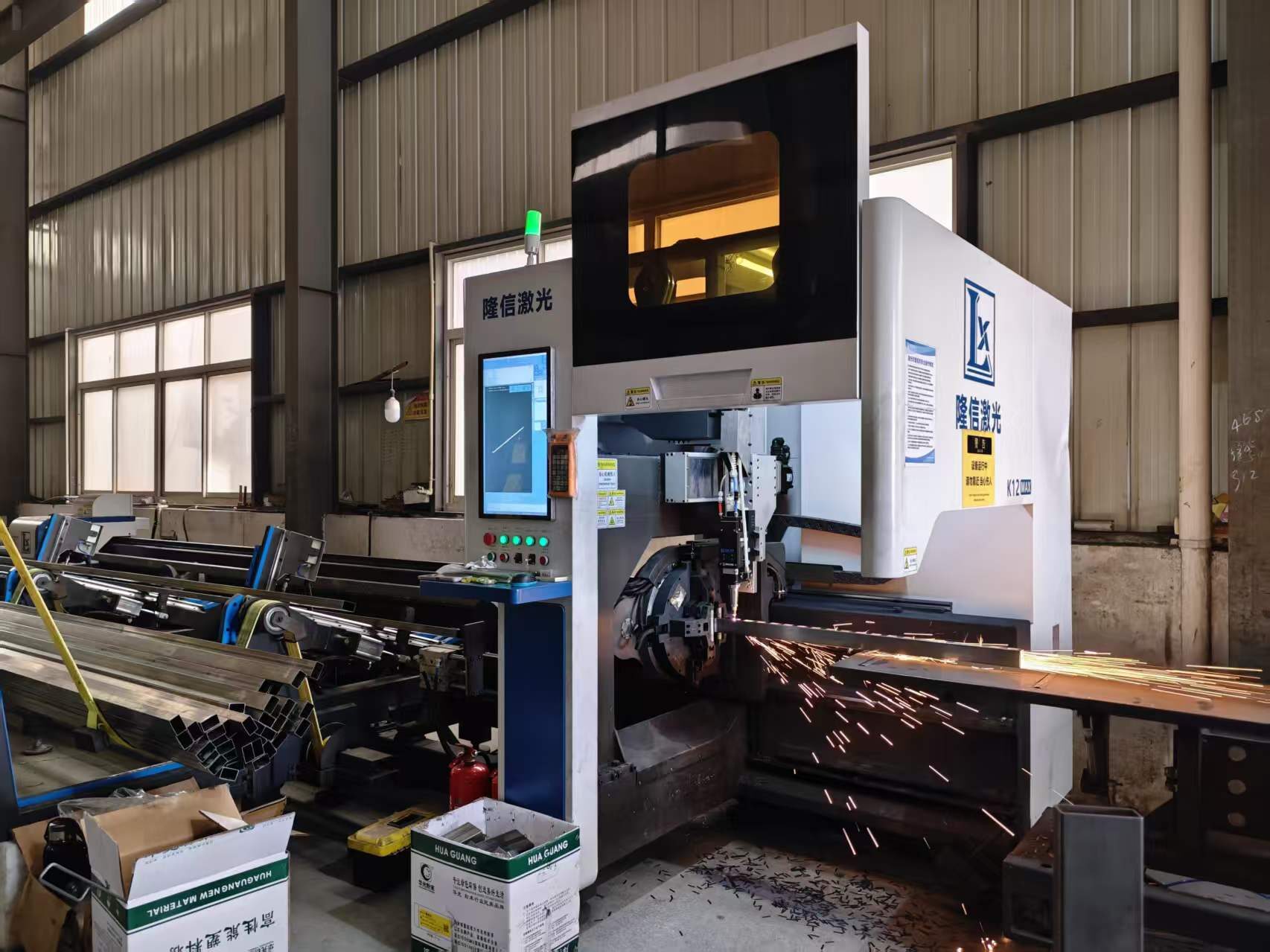
Laser cutting is the stage at CMJ RACKS where a component’s outline is carried into the material and the part is released from the material around it. Flat sheet or plate arrives as one body; a defined boundary is followed through it, and what sits inside that boundary leaves the stage as a finished flat component. Nothing is added to the material and nothing is reshaped — the boundary is what turns material into a part.
Laser cutting gives a component its outline. Flat sheet or plate is brought to the stage as a single body of material, a defined boundary is followed through it, and the material inside that boundary is released as the component while the material outside it is released as waste. The stage does not add features to a part and does not reshape it, which is what separates it from punching: punching introduces something into a part that already has its extent, whereas cutting is the stage that establishes that extent. From there the cut component is available to the stages that come next, whether that is joining, finishing, or the processing its specification calls for. The equipment that carries out the cutting and the wider manufacturing context are set out on the Production Capacity page and the Manufacturing hub.
The cutting logic
A component that leaves this stage is not a part that gained something. It is a part that was released from the material holding it.
Everything this stage does is a division. Flat sheet or plate arrives as one continuous body of material, and the cutting divides that body into the part and the remainder. There is no stage of the process at which material is added, layered on or folded in — the cutting produces a boundary and the boundary produces a part.
That is the distinction between cutting and the stage that introduces features into a part. When a feature is introduced, the part keeps its overall extent and gains something inside it. Cutting does the opposite job: it is the stage that establishes the extent in the first place. Before the boundary is cut there is material; after it, there is a component with an outline.
The practical consequence is that a component on this stage is judged by what its outline encloses and how that outline runs. Its identity as a component does not come from anything added to it, because nothing is added. It comes from where the material was separated.
The cutting path
The outline of a component is settled before the stage runs. What the stage contributes is the route that carries that outline through the material.
What the component is going to be is decided before anything is cut. The stage receives a shape to follow, not a shape to invent.
The cutting path is the route taken through the material. Where it goes is what determines where the material comes apart, so the path is what fixes the boundary.
At the point of cutting the material is being divided rather than bent, folded or drawn. The section is not being changed; it is being released along a line.
Because the path is set rather than improvised, the same outline can be produced on any component built to the same requirement, without the shape depending on the material it came from.
A cutting stage is not judged by what it does to the surface of the material or by how the material behaves under it. Everything that matters is carried by the route: where the path runs, where it turns, and where it closes back on itself. Two components cut from the same sheet differ only in that route, and that difference is the whole of the difference between them.
Component geometry
Every component produced on this stage is defined by an outline and by the relationships that outline contains.
The outer extent of the component is set by the path. Where it runs straight and where it changes direction is what gives the part its shape rather than any treatment of the material.
A path is not limited to an outer edge. Where the component needs geometry inside its outline, that geometry is defined in the same way and in the same pass of the route.
A component can turn as often as its design requires. Each change of direction is a point on the path, which is why an irregular outline is no different in kind from a simple one.
This is the property that makes the stage suited to requirements where the geometry does not run uniform along a length. A stage built on uniformity produces the same section again and again and then divides it; this stage is the other way round, because what it works with is variation. Each component brings its own boundary, and the boundary is what the stage acts on.
What leaves the stage is therefore a flat part with its boundary established and nothing else changed about it. It carries no shape that came from forming and no feature that came from punching; it carries an outline. Whatever processing it needs next is decided by the component, not by this stage.
In the process
This section covers only the position immediately around cutting — what arrives, what this stage does with it, and what happens to the result. The wider process this stage belongs to is set out on the Manufacturing hub.
Nothing about this stage depends on a component already having a shape of its own, because producing the shape is the stage’s job. That is why it sits at the point where material becomes a part: what is fed in is a body of material, and what comes out is a component with a boundary.
From there the component may go on to be joined with others, may go on to finishing, or may go straight to the processing its specification calls for. Cutting makes the boundary; what is done with the component afterwards belongs to the stages that follow, and each of those has its own page.
Questions
This page covered the stage that turns flat material into a component by defining its boundary. The process pages below pick up either side of it — the stages that work on a part after its shape is established, and the hub page that sets out the process the whole line follows.