
The part is already shaped
By the time a part reaches punching it has its section. This stage does not alter that geometry — it adds to the part rather than re-forming it.
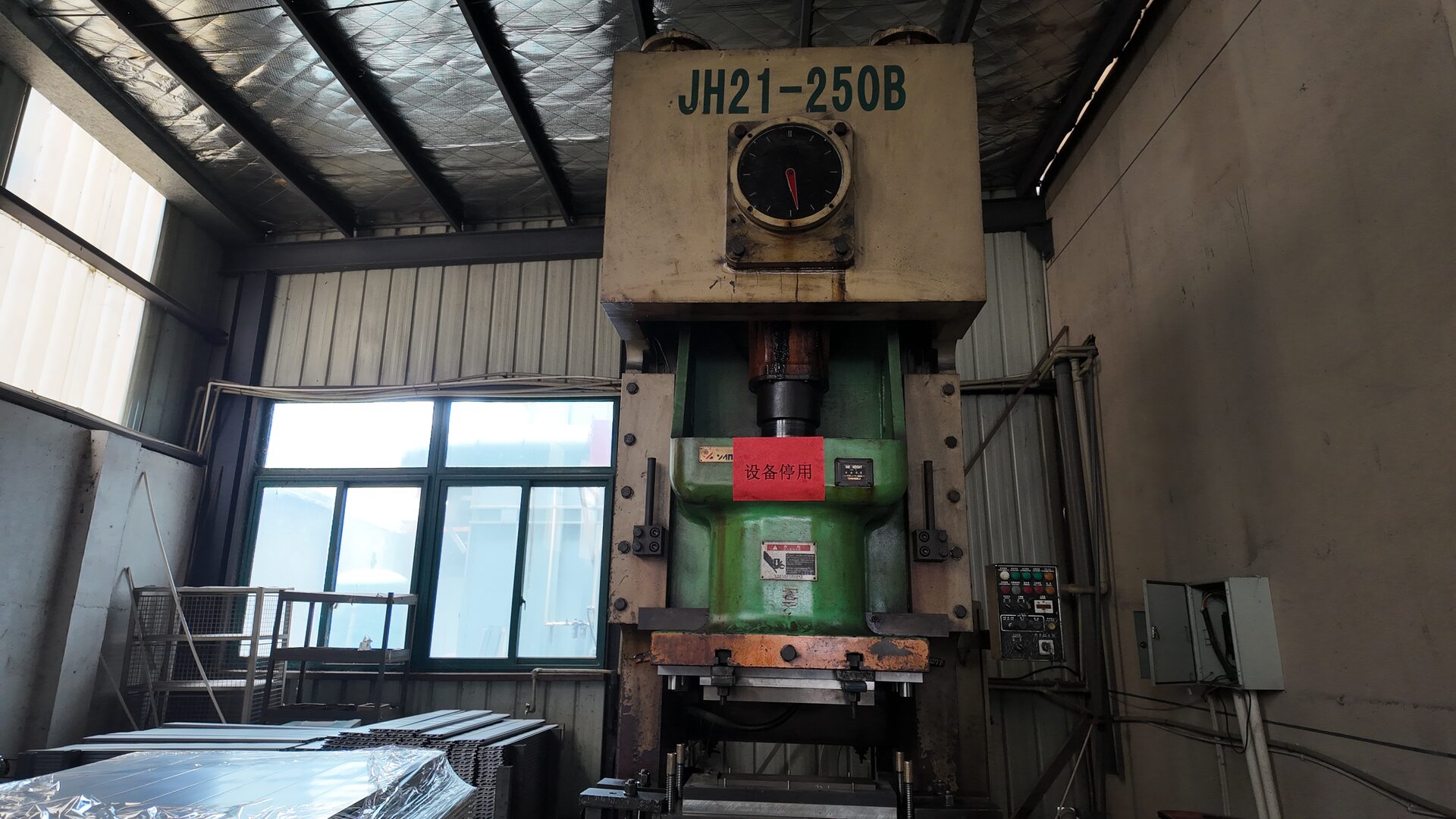
CMJ RACKS uses CNC punching to introduce holes and openings into a metal component. The punching action creates the feature itself, while the CNC control layer determines where that action is applied, so a pattern of features can be placed consistently across the parts of a build. What the stage leaves behind is a part whose openings define how it connects and how it fits.
CNC punching is the stage that introduces features into a metal component. The punching action creates an opening or a formed feature in the material; the CNC control layer determines where on the part that action lands, so the same feature pattern can be produced across the parts a build requires. A formed profile or a flat part enters this stage, and what leaves it is the same part carrying the openings the design calls for — the features that set where a component connects and how it fits with the parts around it. The equipment behind the process and the manufacturing system around it are covered on their own pages.
Capability
CNC punching at CMJ RACKS is the stage that gives a component its openings and formed features. It is the point where a plain section or flat part becomes a part that can be joined and fitted.
The input is a formed profile or a flat part, already carrying the section the component is built around. The output is that same part with holes, openings and formed features introduced into it. Between those two points the material is not reshaped — features are added to it.
That is what makes the stage distinct. Punching works on a part that already has its geometry, and gives it the features that geometry alone cannot provide. Where a component connects to another, and how the two fit together, is decided by what this stage puts into the material.
CMJ RACKS runs this stage as part of an in-house manufacturing sequence, so a part does not leave the factory between receiving its section and receiving its features.
The punching logic
Punching and CNC control are not two separate processes. They are two layers of the same stage: one decides where, the other performs the action.
By the time a part reaches punching it has its section. This stage does not alter that geometry — it adds to the part rather than re-forming it.
The CNC element is the control layer: it determines the position at which the punching action is applied, so a feature pattern is not placed by hand part to part.
The punching action is what actually opens the material. Control sets the placement; the punch does the work on the material itself.
Because placement is controlled rather than judged each time, the same feature pattern can be applied across the parts a build calls for.
A component is defined as much by where its openings sit as by its overall shape. Controlling the placement of the punching action is what allows that pattern to be held from one part to the next, so parts from the same build connect the same way. This page covers the logic of the stage; the equipment behind it is covered on the production capacity page.
Output
Punching produces the features a component needs in order to be assembled and to fit the parts around it.
Holes and openings introduced into the material, giving the part the points at which it will connect to something else.
Features shaped into the part by the punching action, added on top of the section the part already carries.
Because placement is controlled, the same set of features can be produced across the parts of a build rather than matched by hand.
What these features decide
These are the roles the features play, not a specification of the features themselves. The product families that use them are covered on the product pages.
In the process
This section covers only the stages immediately either side of punching. The manufacturing workflow as a whole is covered on the Manufacturing hub.
Because the part arrives already shaped, what punching adds is the set of features the component is assembled by. Those features are what the stages around it work with.
In practice that can mean welding the part into an assembly, cutting material alongside it, or applying the finish last, depending on what the component needs. Punching introduces the features; the processing applied around it belongs to the stages either side, and each of those has its own page.
Questions
Punching is one stage of the manufacturing sequence. The pages below cover the stage that produces the part it works on, the stage that joins what it produces, and the Manufacturing hub that covers how the stages connect as one system.